|
The concentration in the archaeology of the Near East
examines the material culture of southwest Asia
from the Neolithic to Roman periods, with particular emphasis on
socio-political, economic and ideological variables and their relation to
societal structure and change. Students will become familiar with
archaeological and anthropological theory and method in addition to the
Near Eastern evidence. Since the material culture data will be considered
within the context of ancient Near Eastern studies, the student is also
expected to become familiar with ancient Near Eastern language and history.
Near Eastern archaeology students are expected to take
all archaeology or Near Eastern art history seminars offered by the
department unless otherwise directed by their advisor.
Students will take two minors, at least one of which will
consist of a minor in language.
Language Minor
All students will be responsible for a minor in one
ancient language, e.g. Akkadian, Biblical Hebrew.
A second language minor is also possible in lieu of the non-language minor.
Non-language Minor
If they select the non-language minor, students will be
responsible for the archaeology of an area other than their major area
(e.g. Egyptian archaeology) or they may create a minor through selected
courses in other departments (e.g. Classics/Materials Science/Art
History/Anthropology).
History Cycle
(see General Requirements)
Comprehensive Examinations
Comprehensive examinations will be given in the following
four areas:
1. Archaeological method and
theory
2. Archaeology of the Near East
(southwest Asia)
3. Language
4. Non-language minor or second
language minor
Courses in Other Departments
Archaeology students are encouraged to take (or audit)
courses in other departments, depending on their research interests.
Fieldwork
Participation in field projects in the Near
East, department-sponsored or otherwise, is recommended for
all archaeology students. In particular, participation in the Johns
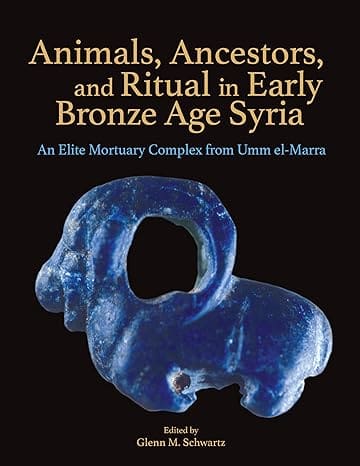
Hopkins/University of Amsterdam expedition
to Tell Umm el-Marra ,
Syria,
will be encouraged.
Smithsonian Institution
Study in the Smithsonian Institution under the
supervision of adjunct professors Ann Gunter (Sackler
Gallery of Asian Art) and Melinda Zeder (American Museum of Natural History) may be an
option for interested students.
Return to Graduate Program
Page
|