|
|
The Johns Hopkins/University of Amsterdam
|
|
|
Introduction Region and Site Urban Origins: The Early Bronze Age (ca. 2700-2000 BC) Collapse: Middle Bronze I (ca. 2000-1800 BC) Urban Regeneration: Middle Bronze II (ca. 1800-1600 BC) Imperial Absorption: Late Bronze (ca. 1600-1200 BC) Occupation after the Bronze Age Conclusions and Acknowledgments Life in the Field Publications |
|
Project Directors |
|
|
Glenn M. Schwartz schwartz@jhu.edu Department of Near Eastern Studies The Johns Hopkins University 3400 North Charles Street Baltimore MD 21218 USA |
Hans H. Curvers CurversH@solidere.com.lb Amsterdam Archaeology Center University of Amsterdam The Netherlands/ Beirut City Centre Archaeological Salvage Project Beirut, Lebanon |
![]() |
![]() |
Introduction |
|
|
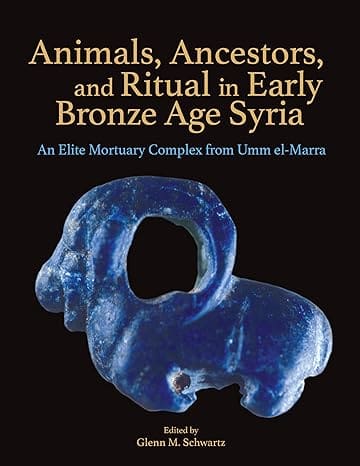
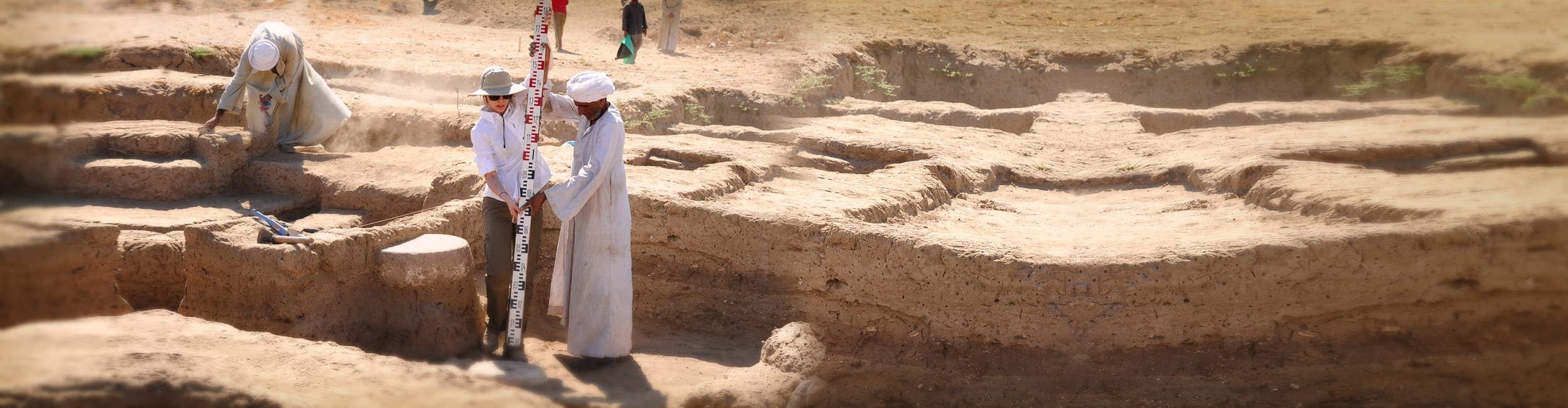
In 1994, the Johns Hopkins University and the University of Amsterdam inaugurated a long-term program of archaeological research based at Umm el-Marra, located in the Jabbul plain of western Syria. The primary goal of the project is the investigation of the emergence, development, and episodes of decline of a west Syrian urban society from the Early to the Late Bronze periods (ca. 3000-1200 BC). In the 1970’s, excavations at Ebla revealed that western Syria witnessed the birth of a distinctive urban civilization in the third millennium BC. Study of the development of this civilization furnishes an important new perspective on the rise of cities and states in the Near East, providing an alternative to the traditional paradigms from Mesopotamia and Egypt. |
![]() |
![]() in the Bronze Age |
Among the problems to be considered are the origins of complex society in the third millennium B.C. (Early Bronze Age); the collapse of cities and states at the end of Early Bronze; urban regeneration and formation of the Yamkhad state in the early second millennium B.C. (Middle Bronze Age); and incorporation of the region into the Mitannian and Hittite empires in the mid-late second millennium B.C. (Late Bronze). Occupations at Umm el-Marra in the later first millennium BC and early first millennium AD furnish an opportunity to investigate local developments in the Achaemenid Persian, Hellenistic and Roman periods. |
| Next Page Go to page: 1 2 3 4 5 6 7 8 9 10 Table of Contents | |